
Sciatica Treatment at Manhattan Sports Medicine
Sciatica is nerve pain that starts in the lower back and travels down through the buttock and leg — and it rarely improves by waiting it out.
At Manhattan Sports Medicine & Wellness Group, sciatica treatment begins with finding what is actually compressing the sciatic nerve. A herniated disc, spinal stenosis, and a tightened piriformis muscle all produce similar pain but call for different care, so the diagnosis drives the plan rather than the other way around.
Our physicians, chiropractors, and physical therapists work together across three Manhattan offices to relieve the pain and address the cause, so it does not return the moment you go back to your normal routine.
Common Symptoms of Sciatica
Sciatica pain follows the path of the sciatic nerve, which runs from the lower back through the hip and buttock and down the back of the leg. That path is what separates it from ordinary back pain — the pain travels rather than staying put, and it almost always affects one side of the body. Patients describe it in different ways depending on where the nerve is being compressed:
- Sharp or burning pain radiating from the lower back through the buttock and down one leg
- Tingling or pins-and-needles sensations in the leg, calf, or foot
- Numbness or muscle weakness in the lower back, buttock, leg, or foot
- Pain that worsens after sitting or standing for long stretches, or when coughing and sneezing
- Difficulty straightening the leg, or a limp that develops to avoid the pain
What Causes Sciatica, and How Is It Diagnosed?
Sciatica is a symptom rather than a diagnosis on its own, which is why identifying the source matters more than naming the pain. Most cases trace back to something pressing on the nerve root in the lower spine, though the specific cause changes what treatment will actually work.
- Herniated disc — the soft center of a spinal disc pushes outward and presses on the nerve root. The most common cause by a wide margin.
- Spinal stenosis — the spinal canal narrows with age and crowds the nerves running through it.
- Degenerative disc disease — discs lose height and cushioning over time, reducing the space available to the nerve.
- Piriformis syndrome — the piriformis muscle in the buttock tightens or spasms and irritates the nerve below the spine entirely.
- Injury or spondylolisthesis — direct trauma to the lower spine, or a vertebra slipping forward over the one beneath it.
Diagnosis starts with your history and a physical exam that tests reflexes, strength, and how the leg responds to specific movements — often enough on its own to locate which nerve root is involved. When symptoms are severe, persistent, or point toward structural narrowing, MRI or CT imaging confirms the picture before treatment begins. That sequence matters: piriformis-driven sciatica responds to soft tissue work and targeted physical therapy, while a compressed nerve root from stenosis calls for a different approach entirely.
Sciatica Treatment Options in NYC
The large majority of sciatica cases resolve without surgery. What they do need is treatment aimed at the actual source of compression, delivered consistently rather than in one-off visits. Because our physicians, chiropractors, physical therapists, and acupuncturists all practice in the same offices, your plan can combine approaches and shift as your symptoms change — without starting over with a new provider each time.
Chiropractic Care
Spinal adjustments restore movement to restricted segments of the lower back and reduce mechanical pressure on the nerve root. For disc-related sciatica this often produces the earliest relief, and it pairs well with rehabilitation that keeps the improvement in place. Our chiropractic team treats sciatica at all three Manhattan offices.
Physical Therapy
Targeted exercise addresses what allowed the compression to develop in the first place — weak deep core muscles, tight hip rotators, poor lifting mechanics, or the hours of sitting most New York jobs require. Sessions are one-on-one with a licensed therapist, and the home program matters as much as the visits. This is the piece that keeps sciatica from returning.
Acupuncture
For patients whose nerve pain persists through manual treatment, or who want to limit medication, acupuncture can reduce the inflammation surrounding an irritated nerve and ease the muscle guarding that develops around it. It works well alongside chiropractic and rehabilitation rather than in place of them.
Interventional Pain Management
When pain is severe enough to prevent participation in therapy, our physicians offer pain management options including image-guided epidural steroid injections and nerve blocks. These are used to create a window of relief that makes active rehabilitation possible, not as a long-term answer on their own.
When Sciatica Surgery Is Considered
Surgery is the exception in sciatica care, not the expected endpoint. It becomes worth discussing in a narrow set of situations: pain that has not responded to several months of consistent conservative treatment, progressive weakness in the leg or foot, or imaging showing a disc or narrowing that is severely compressing the nerve root. Procedures such as microdiscectomy and laminectomy relieve that pressure directly and are far less invasive than spinal surgery once was.
Our approach is to exhaust non-surgical options first, and to be straightforward with you when they are not working. If your case reaches the point where a surgical opinion is warranted, our physicians will say so and coordinate the referral rather than continuing treatment that is not helping.
Workers’ Compensation and No-Fault Sciatica Care
Sciatica is one of the most common injuries we see arrive through workers’ compensation and no-fault claims. Lifting on the job, a fall, or the impact of a car accident can herniate a disc outright, and the nerve pain that follows often keeps people out of work for weeks. All three of our Manhattan offices accept both.
Our staff handles the authorizations, forms, and progress reporting these claims require, so the paperwork does not become your responsibility while you are recovering. If your sciatica came from a workplace injury or a motor vehicle accident, tell us when you call and we will confirm what your claim needs before your first visit.
Learn more about our workers’ compensation and no-fault care.
Frequently Asked Questions About Sciatica
What kind of doctor should I see for sciatica?
Sciatica is treated by physiatrists, chiropractors, and physical therapists, and which one you start with depends on the cause. At Manhattan Sports Medicine all three practice in the same offices, so you are evaluated once and treated by whichever combination your case actually needs.
How long does sciatica usually last?
Mild sciatica often eases within four to six weeks. Pain that persists past that point, or that keeps returning, usually means the underlying compression has not been addressed rather than that the nerve needs more time.
Can sciatica go away on its own?
It can, when the cause is a minor disc irritation that settles as inflammation subsides. It is far less likely when the cause is spinal stenosis, a large herniation, or a movement pattern that keeps reloading the nerve. Weakness in the leg or foot is a reason to be seen rather than to wait.
Do I need a referral to be treated for sciatica?
Under New York’s direct access rules you can begin physical therapy without a referral for a limited period, though some insurance plans require one. Call us and we will confirm what your specific plan needs before your first visit.
Which of your NYC offices treats sciatica?
All three. Our Garment District office is at 512 7th Avenue, our Midtown West office at 244 W 54th Street, and our Financial District office at 40 Broad Street. Each has physicians, chiropractors, and physical therapists on site.
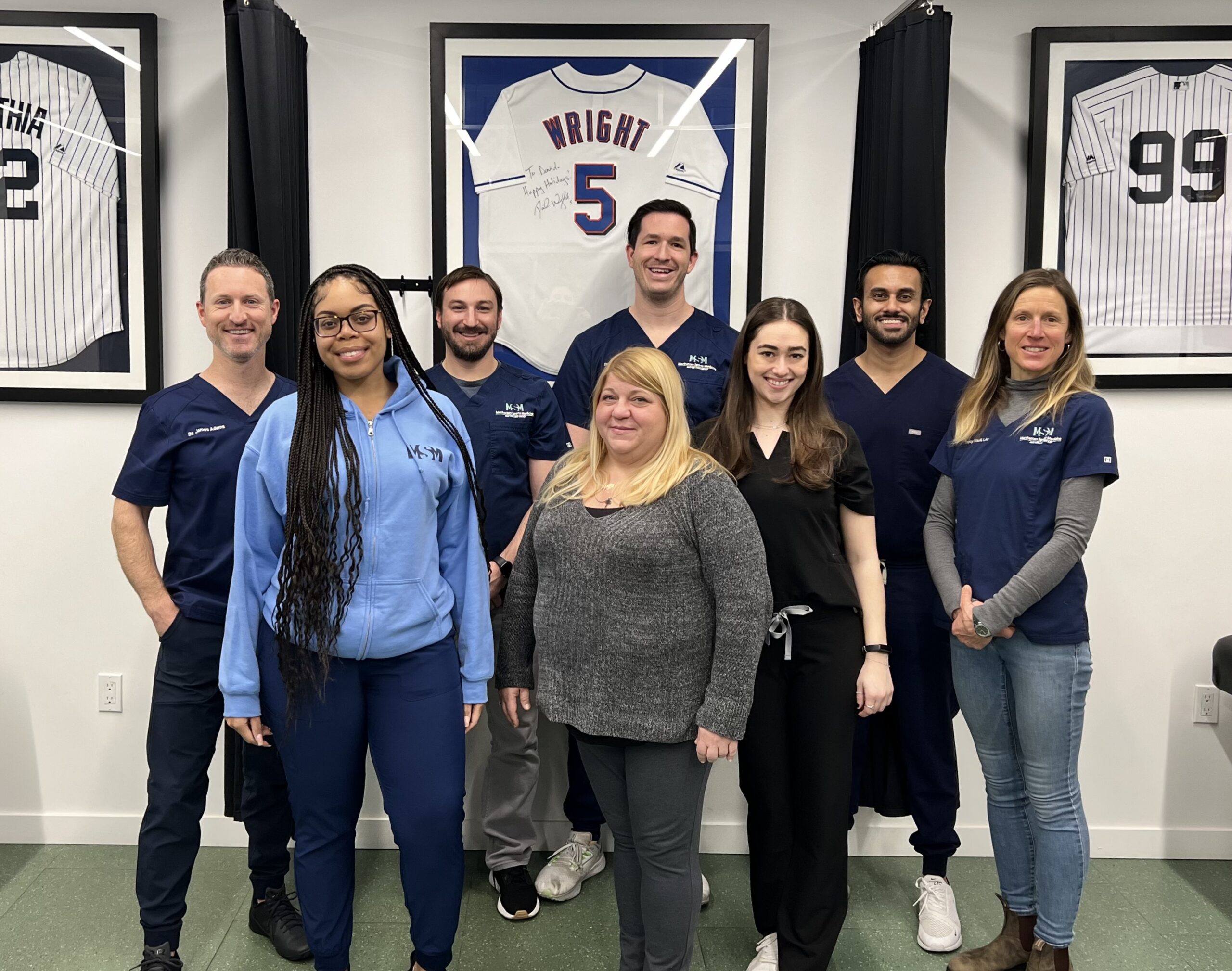
Get Relief From Sciatica Pain
Nerve pain that travels down your leg does not have to be something you manage indefinitely. Our team will find what is compressing the nerve and build a plan around it — at whichever Manhattan office is easiest for you to reach.