
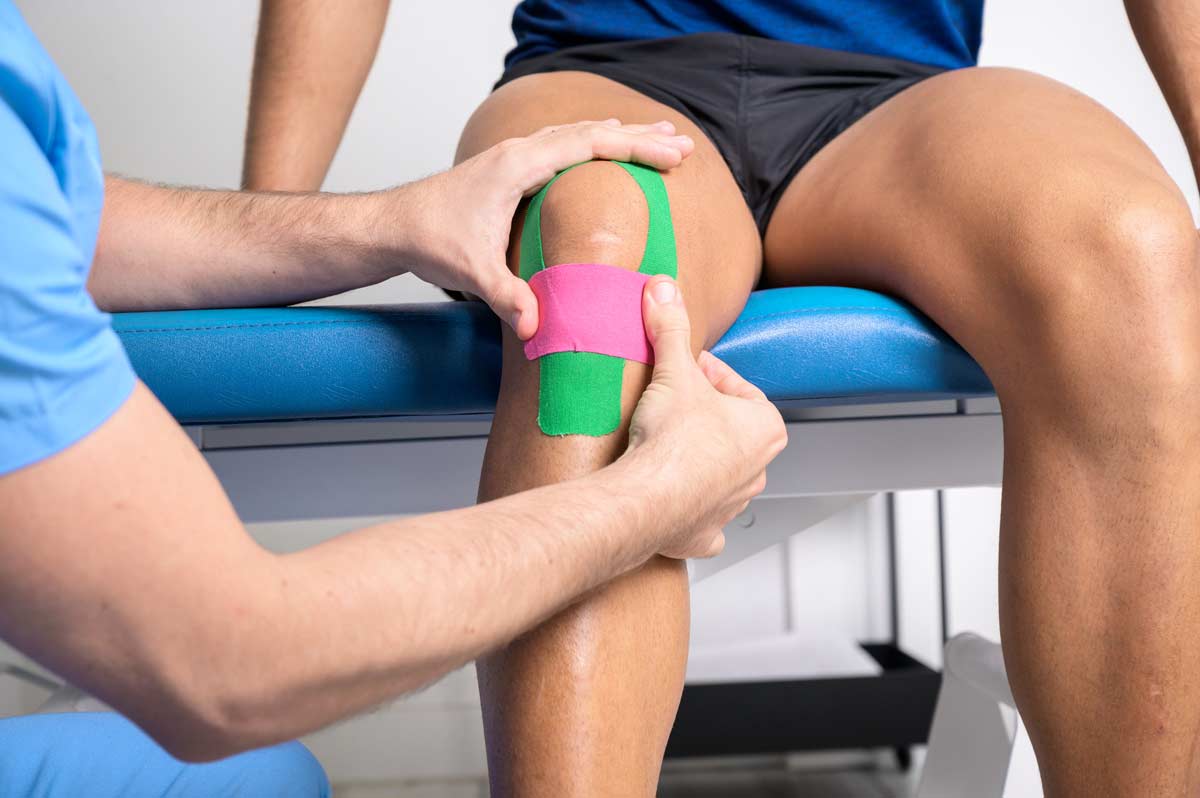
KT tape is elastic cotton tape applied to the skin to support muscles and joints without limiting how they move.
Unlike rigid athletic tape, which restricts a joint to protect it, kinesiology tape stretches with you. That is what makes it useful during activity rather than only at rest — and why you see it on athletes mid-competition rather than only in the treatment room. This guide covers what the tape does, how it is designed to work, and when taping is worth adding to a treatment plan.
What Is Kinesiology Tape?
KT stands for kinesiology tape. It is a thin, elastic cotton strip with an acrylic adhesive backing, designed to stretch roughly to the same degree human skin does — about 30 to 40 percent beyond its resting length. It is latex-free, water-resistant, and typically stays on for three to five days.
The tape carries no medication. Everything it does comes from how it interacts mechanically with the skin and the tissue underneath, which is why the way it is applied matters far more than the brand or the colour. Direction of pull, amount of stretch, and where the anchor points sit all change what the application does.
How Does KT Tape Work?
Applied with stretch across a joint or muscle, the tape recoils slightly and lifts the skin. Practitioners use that effect in four ways depending on what they are treating:
- Reducing pressure on the tissue — lifting the skin is intended to decompress the space beneath it, which practitioners apply where local swelling is limiting movement.
- Sensory feedback — the tape stimulates receptors in the skin continuously. This is the most consistently observed effect: constant sensory input can change how pain is perceived and how aware you are of the joint’s position.
- Proprioceptive cueing — because you can feel the tape as you move, it acts as a reminder of joint position. Useful when the goal is retraining a movement pattern rather than restricting one.
- Support without restriction — the tape adds stability at the end of range while leaving normal movement available, which is why it suits activity rather than immobilisation.
Different applications target different effects. Taping a shoulder to cue posture uses a different direction of pull than taping a calf to manage swelling — which is the part that is difficult to replicate from a video at home.
What KT Taping Does Well
The effect patients report most consistently is short-term pain relief that lets them move more normally. That matters more than it sounds. Pain changes how you move, and moving badly to avoid pain is often what turns a minor problem into a persistent one. Tape that lets you walk, run, or lift with normal mechanics buys the window in which rehabilitation can do its work.
The second is confidence in the joint. Patients returning to activity after an injury often hesitate long after the tissue has healed. Feeling supported changes that, and the tape provides support without the stiffness of a brace.
It is also very low risk. The tape is drug-free, non-invasive, and the main consideration is skin sensitivity to the adhesive — which is why a clinician checks the skin before applying it and why it comes off if irritation develops.
What KT Tape Is Used For
Taping is most often used alongside other treatment for conditions where pain is limiting normal movement:
- Tendon overuse — Achilles, patellar, rotator cuff, and tennis elbow
- Knee pain — particularly patellofemoral pain, where cueing the kneecap’s tracking is the goal
- Plantar fasciitis and foot pain — supporting the arch through the stance phase of walking or running
- Shoulder and neck posture — a tactile reminder to stop rounding forward through a long desk day
- Post-injury swelling — managing localised swelling once the acute phase has passed
- Return to sport — added support during the phase between clearance and full confidence
For foot and arch problems specifically, taping tends to work best combined with loading work — our guide to exercises for metatarsalgia covers the strengthening side of that.
Where Taping Fits in a Treatment Plan
Tape is a tool within a plan, not the plan. It creates conditions in which treatment can work — less pain, better movement, more confidence — while the underlying problem gets addressed. On its own it manages a symptom. Combined with rehabilitation it contributes to a fix.
That is how our team uses it. A taping application is decided during examination, after establishing what is actually causing the pain, and applied alongside physical therapy, chiropractic care, or soft tissue work depending on the case. Our sports medicine team also teaches patients to reapply between visits when taping is part of an ongoing programme.
The variable that matters most is application. Same tape, same joint, different direction of pull produces a different result — which is the difference between tape that helps and tape that simply sits on your skin.
Frequently Asked Questions
How long can I leave KT tape on?
Three to five days is typical. It is water-resistant, so showering and swimming are fine. Remove it sooner if the skin becomes itchy or red, and take it off slowly in the direction of hair growth.
Does the colour of the tape matter?
No. The colours exist for preference and visibility. What changes the effect is the direction of pull, how much stretch is applied, and where the anchors are placed.
Can KT tape help with nerve pain?
It can help when the nerve is being irritated by tight or swollen tissue around it, since reducing that pressure eases the irritation. When the nerve is compressed at the spine, taping may reduce the muscle guarding that develops around it, but the compression itself needs to be treated directly. Identifying which applies comes first.
Can I apply it myself?
For a straightforward application you have been shown, yes — that is often part of the plan. For a new problem, have it applied by a clinician first. The application depends on the diagnosis, and the wrong direction of pull can work against what you are trying to achieve.
When should I not use KT tape?
Avoid it over broken or irritated skin, over an active infection, or where you have a known adhesive allergy. And it is not the answer for an undiagnosed injury — taping over pain you have not had examined risks masking something that needs attention.
Get Taped Correctly
If pain is changing how you move, our team will identify why and build a plan around it — with taping included where it helps. Three Manhattan offices.

