
Soft Tissue Treatment at Manhattan Sports Medicine
Active Release Technique treats the scar tissue and adhesions that build up in overused muscles — the reason an injury keeps coming back after the pain has settled.
Repetitive motion, whether that is a training block or eight hours at a desk, causes small tears that heal with dense, inflexible tissue. That tissue restricts how a muscle glides, shortens its range, and can trap the nerves running alongside it. Stretching does not release it, and rest does not dissolve it.
At Manhattan Sports Medicine & Wellness Group, our providers combine sustained manual pressure with specific active movements to break down that restriction and restore normal glide — then build the strength and mechanics that stop it re-forming.
Conditions Active Release Technique Treats
ART is most effective on soft tissue problems that developed gradually through repetitive load rather than a single acute injury:
- Tendinitis and tendinopathy — Achilles, hamstring, patellar, rotator cuff, and tennis or golfer’s elbow
- Nerve entrapment — carpal tunnel syndrome, thoracic outlet syndrome, and sciatic irritation from a tight piriformis
- Plantar fasciitis and chronic foot pain that returns with mileage
- Neck and shoulder restriction from desk posture, including headaches that trace to the upper trapezius
- Hip and IT band pain in runners and cyclists
- Post-surgical scar tissue limiting range of motion after an otherwise successful repair
It works alongside chiropractic care and physical therapy rather than replacing either — releasing the restriction is what makes the strengthening work stick.
What to Expect During a Session
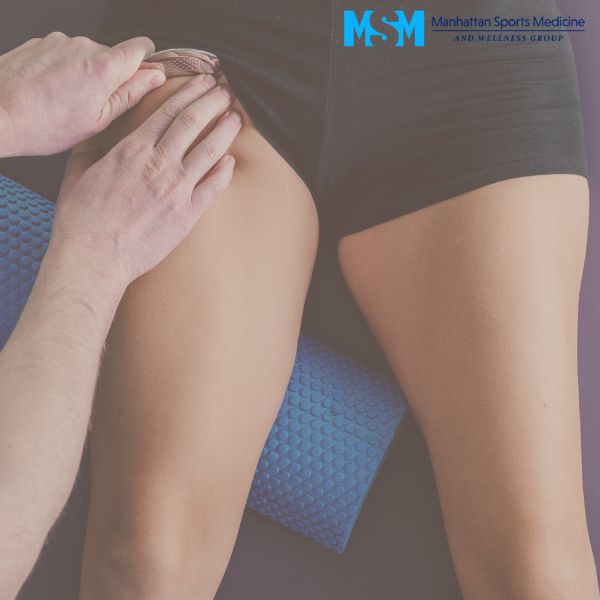
Your provider first locates the restriction by feel, moving through the tissue to find where it has lost its normal texture and glide. That examination is the treatment’s starting point — the adhesion has to be found before it can be released.
Once located, your provider holds firm pressure on the tissue while you move the limb through a specific range. That combination of pressure and active motion is what separates ART from passive soft tissue work: the movement pulls the tissue under the contact point, breaking the adhesion along the line it actually restricts.
It is uncomfortable while it happens — most patients describe a specific, productive ache rather than sharp pain, and it eases as soon as the contact lifts. Sessions are short, usually ten to fifteen minutes for a single area, and often combined with other treatment in the same visit. Many patients notice improved range immediately, with the fuller benefit arriving over several sessions.
How ART Differs From Sports Massage
Both work on soft tissue, but they are doing different jobs. Sports massage broadly increases circulation, reduces general muscle tension, and aids recovery across whole muscle groups. It feels good and it has real value in a training routine.
ART is diagnostic and targeted. Your provider is looking for one specific adhesion in one specific structure, then releasing it through a defined movement pattern. The treatment area is small, the session is short, and the goal is restoring mechanical function rather than general relaxation.
Which one you need depends on the problem. Diffuse tightness after heavy training responds well to massage. Pain that returns to the same spot every time you increase your mileage is usually an adhesion, and that needs the targeted approach. Our providers will tell you which applies after examining you.
Who Benefits From Active Release Technique
Athletes make up a large share of our ART patients — runners, cyclists, lifters, and anyone whose sport repeats the same movement thousands of times. Our sports medicine team uses it both to treat existing injuries and to clear restrictions before they become injuries.
The other large group is people whose work causes the problem. Desk-based jobs load the neck, shoulders, forearms and hips in exactly the repetitive, low-grade way that produces adhesions, and New York working hours make that worse. Musicians, dental professionals, hairstylists and trades workers see the same patterns in the structures their work demands most.
ART is also frequently part of treatment for repetitive strain injuries arriving through workers’ compensation claims, where the injury developed over months of the same task rather than in one incident.
Frequently Asked Questions
Does Active Release Technique hurt?
There is discomfort during the contact, usually described as a specific deep ache rather than sharp pain, and it stops as soon as the pressure lifts. Some tenderness in the treated area for a day afterward is normal. Tell your provider if it crosses into sharp pain — the pressure can be adjusted.
How many sessions will I need?
Most soft tissue restrictions respond within three to six sessions. Longstanding problems, or ones where the underlying movement pattern has not changed, take longer — which is why we pair the treatment with strengthening rather than treating the same spot indefinitely.
Is ART covered by insurance?
It is generally billed as manual therapy within a chiropractic or physical therapy visit rather than as a separate service, so coverage usually follows your plan’s terms for those visits. Call us with your plan details and we will confirm before your appointment.
Can ART help sciatica?
When the sciatic irritation comes from a tight piriformis muscle rather than a spinal disc, yes — releasing that muscle takes the pressure off the nerve directly. When the cause is a herniated disc or spinal stenosis, ART may ease the surrounding muscle guarding but the compression itself needs a different approach. Identifying which one you have comes first.
Where to Find Active Release Treatment
Active Release Technique is performed by our chiropractors, so availability follows their schedules rather than being offered at every office on every day. Tell us when you call that you are looking for ART and we will book you with a provider who performs it, at whichever location works for you.
512 7th Avenue — Garment District
512 7th Avenue, 14th Floor, New York, NY 10018
Phone: 212-768-7979
244 W 54th Street — Midtown West
244 W 54th Street, Suite 1002, New York, NY 10019
Phone: 212-262-7246
40 Broad Street — Financial District
40 Broad Street, Suite 601, New York, NY 10004
Phone: 212-792-9292
Book Active Release Treatment in NYC
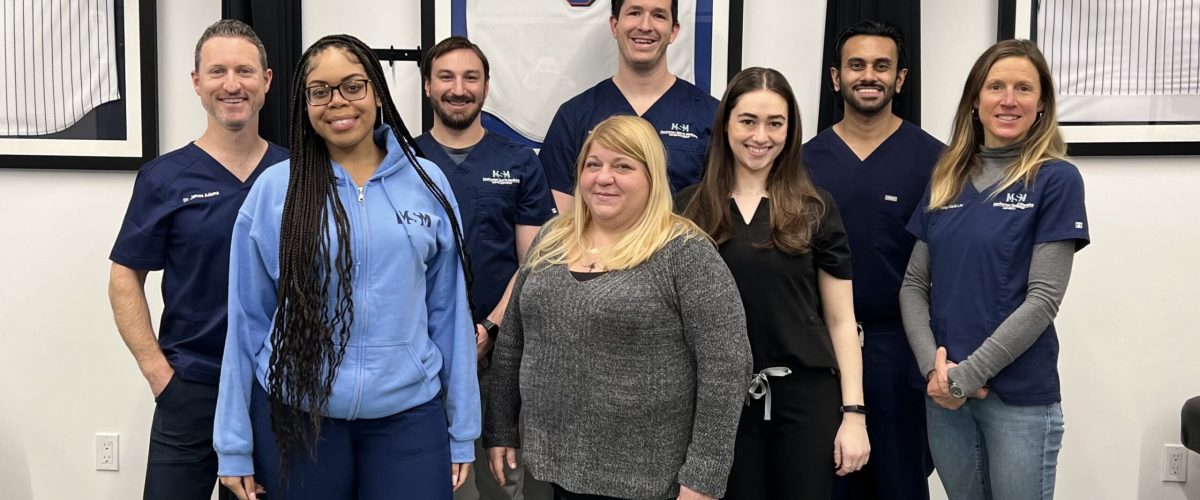
If the same injury keeps returning no matter how much you rest it, the tissue itself is likely the problem. Our team will find the restriction and release it — at whichever Manhattan office is easiest for you to reach.